
Improve Cash Flow
Revenue growth does not always translate into available cash. Working capital can remain trapped across inventory, receivables, procurement and operational cycles, limiting the ability to fund growth and respond to opportunity.
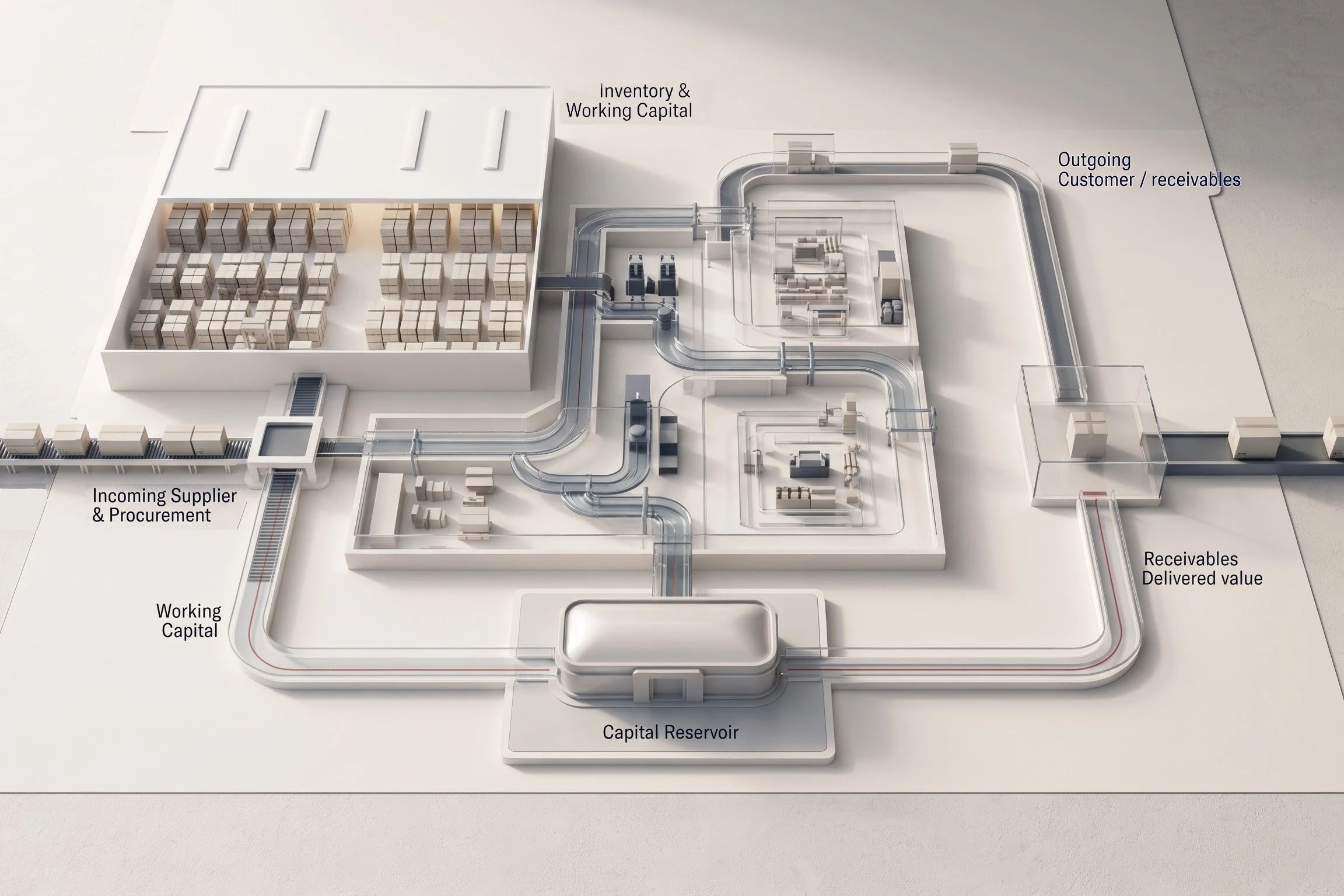
The Business Problem
Cash is the lifeblood of an operational business. Yet growing businesses can remain cash-constrained even when revenue and reported profitability are improving.
Working capital becomes trapped when inventory moves slowly, receivables take too long to convert, procurement cycles are poorly aligned, or payment terms create unnecessary pressure on liquidity.
The challenge is rarely a single financial metric. It is understanding how operational decisions collectively affect the movement and availability of cash.
-
help
"Why is revenue increasing while cash remains constrained?"
-
help
"Where is working capital trapped within the business?"
-
help
"Which operational activities are consuming unnecessary cash?"
-
help
"How much working capital could be released by improving inventory, receivables and procurement cycles?"
Diagnostic Focus Areas
We examine the operational and financial drivers that influence how quickly cash moves through the business.
Working Capital
Assess where capital is committed across current assets and liabilities, and identify opportunities to reduce unnecessary working-capital requirements.
Inventory & WIP Velocity
Identify slow-moving inventory, excess stock and WIP accumulation that tie up cash without creating corresponding business value.
Receivables & Payables
Examine collection and payment cycles, customer and supplier terms, and the timing mismatches that affect cash conversion.
Our Approach
We begin by understanding how cash moves through the business—not by prescribing a technology solution.
Simpliworx combines executive business questions, operational analysis and evidence from existing business data to identify the causes of working-capital pressure and prioritise practical improvements.
The objective is to improve liquidity without compromising operational performance or growth.
- Business & Process Diagnosis
- Performance Baseline
- Improvement Design
The PIM Connection
Cash Flow & Working Capital is one of the Five Business Performance Dimensions addressed through the Simpliworx Performance Intelligence Model (PIM).
PIM provides a structured approach to understanding the business context, diagnosing performance, designing practical interventions, delivering improvements and developing the capability to sustain them. For cash flow, this means connecting financial outcomes to the operational processes and decisions that influence them.
Explore PIM arrow_forwardBusiness Outcomes
Improving cash flow creates greater operational freedom and strengthens the capacity to fund sustainable growth.
Faster Cash Conversion
Reduce delays between delivering value, invoicing customers and receiving payment.
Lower Capital Tied Up
Release cash committed unnecessarily to inventory, WIP and working capital.
Better Working-Capital Alignment
Improve the alignment of customer collections, supplier payments and operational cash requirements.
Stronger Liquidity
Improve the availability of cash to support operations, investment and growth.
Initiate an Executive Discussion
If cash is becoming a constraint despite business growth, the underlying causes may sit across several parts of the operating model. Discuss your situation with our senior team and explore where working capital may be trapped and where measurable improvement could begin.
Initiate Discussion arrow_forward